
Wind turbine blades operate under changing loads and environmental conditions. Following their dynamic response over time is an important part of condition monitoring. Recent reporting republished by Sina Finance described progress in Wuxi Brillouin's passive silicon photonic sensing: small-batch deliveries have been made, with applications on the blades of fifteen wind turbines across three wind farms in China.
Reporting sources: Sina Finance · Wuxi Municipal Government
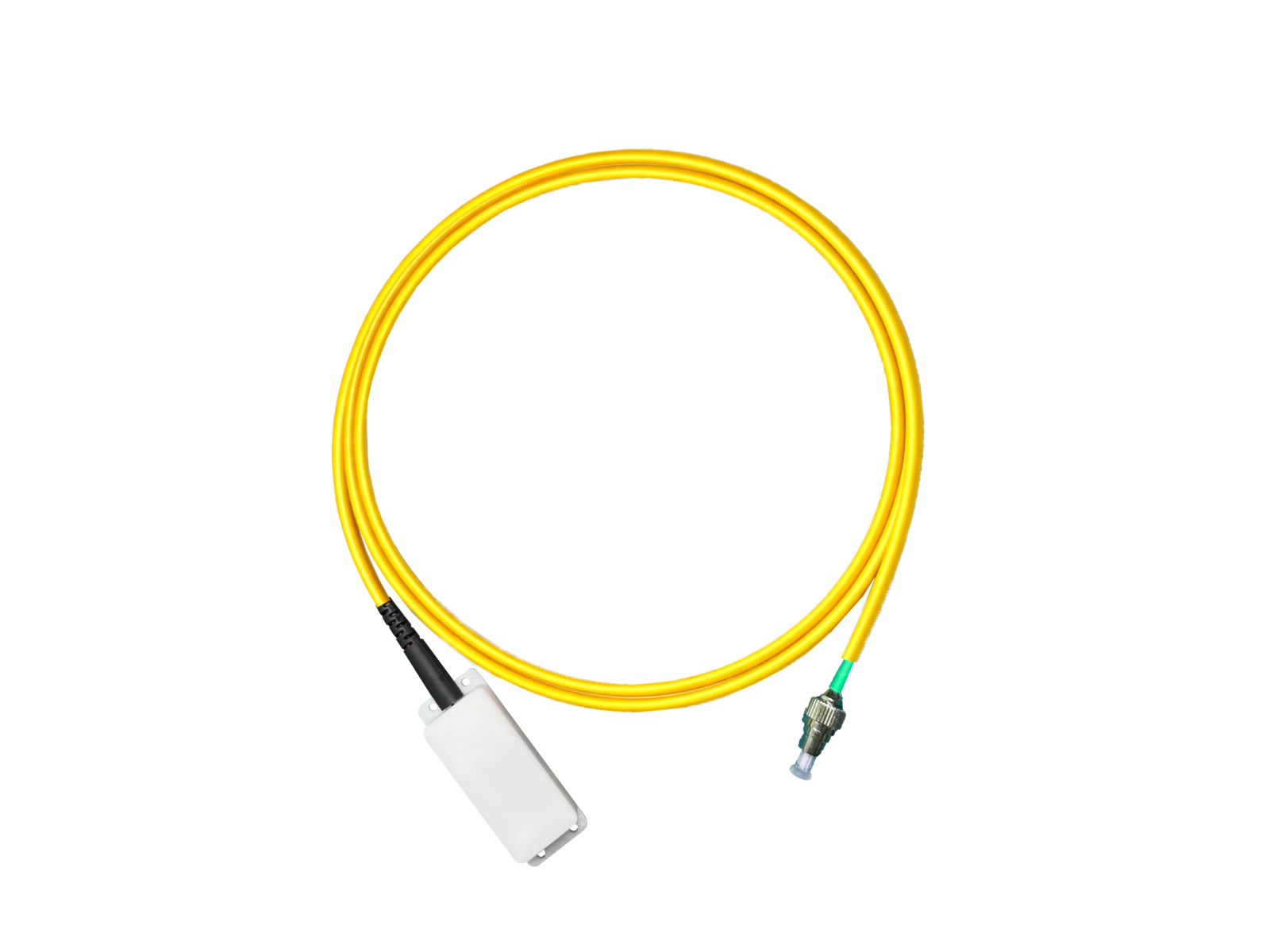
Passive fiber sensing for blade monitoring
Sensing elements, transmission links and interrogation equipment must suit blade installation and operating conditions. Wuxi Brillouin's silicon photonic sensing products connect measurement points to interrogators through optical fiber, providing a way to collect dynamic information at critical locations. Passive measurement points also offer different design options when considering field power and electromagnetic conditions.
Three-axis acceleration monitoring captures vibration responses in different directions. Acoustic signature monitoring records sound-related features of equipment operation. Sensor position, orientation, fastening and acquisition settings need to be considered together so that measurements correspond to the intended component and operating state.
Turning recorded signals into condition information
Condition monitoring combines long-term trends with operating information such as speed, loading, environment and maintenance records. Vibration amplitudes, spectra and acoustic features can be considered alongside equipment data to give maintenance teams a broader view of changes.
The engineering work therefore extends beyond sensor installation. It also includes channel configuration, data transfer, software displays, historical review and alarm settings. Field recordings and continuing commissioning help develop a monitoring approach suited to the individual equipment.
Combining point measurements and distributed sensing
Silicon photonic point sensors and distributed fiber sensing address different measurement tasks. Three-axis acceleration and acoustic signatures at critical locations can complement temperature, acoustic or strain information along an asset. Selecting the right combination starts with the monitoring objective and installation conditions.
Wuxi Brillouin continues to develop fiber sensing from instruments into industry applications. For wind energy equipment, work with partners covers sensor selection, interrogator configuration and data use, supporting condition observation throughout the equipment lifecycle.
Sensor position and orientation identify what is being measured
A wind turbine blade does not operate under one fixed condition. Its spatial position, loading and environment change, while sensor position, orientation and fastening influence the recorded dynamic response. An engineering plan should identify the blade locations of interest, required channels and installation conditions for both sensors and fibers, keeping these details in the project records.
Three-axis acceleration data represents motion in different directions, so channel names and orientation markings need to remain clear. Fiber routes require suitable fastening and protection, with attention to connectors, bends and future inspection. Channel checks and initial recordings after installation establish the relationship between each measurement and its location for later comparison.
Understanding trends in relation to operating conditions
Condition monitoring considers both the measurement and the operating state in which it was recorded. Vibration and acoustic features may differ with speed, loading and environmental conditions. Associating measurement times with operating records helps maintenance teams distinguish a change that follows normal operation from a persistent trend that deserves further inspection.
Historical data can be organized by measurement point, time period and operating condition, with curves, spectra and related operating information reviewed together. Retaining recordings of noteworthy periods and adding inspection and maintenance findings provides a more useful basis for future comparisons. This connects sensing data with the work of maintaining the equipment.
Coordinating sensors, interrogators and software
An online monitoring configuration must consider measurement point counts, fiber access, acquisition settings, data transfer and software functions together. Sensors respond to changes at the selected locations, interrogators convert optical information into usable data, and software provides display, storage, retrieval and record management. Consistent settings across these elements support continuous monitoring records.
Wuxi Brillouin works with partners on silicon photonic sensors, fiber optic interrogators and supporting software. Equipment type, installation space, measurement layout and existing platform interfaces provide the basis for configuration discussions. Experience from wind turbine blade applications also informs continuing product and engineering development, extending fiber optic dynamic sensing to other critical equipment.
Explore the three-axis silicon photonic accelerometer and fiber optic acoustic signature sensor, or discuss a configuration for your equipment.