Power & cables · DTS
LIGHTRAMAN · FIBER SENSING FOR PHYSICAL AIFiber optic sensing.
Fiber optic sensing.
Sense the physical world.
A sensing foundation for physical AI & world models
One fiber carries information and senses continuously, turning real asset conditions into spatially located data for asset management, digital twins and world models.
Passive · Continuous · EMI-immune · Spatially resolved · Long-life · Low-maintenance
Distributed fiber sensing systems & continuous safety monitoring
Loading interactive model…
Explore 9 interactive scenes & 40 real projects ↓CONTINUOUS SENSING · CRITICAL ASSETSLocate change.
Locate change.
Understand your critical assets.
Distributed fiber optic sensing equipment and continuous safety monitoring solutions for critical infrastructure and industrial assets.
We share real project experience with strategic partners and support installation, operation and handover, helping partners reach more application sectors.
ONE FIBER · CONTINUOUS INSIGHT
One fiber. Communication and continuous sensing.
With no power required at individual sensing points, suitable technologies and configurations provide dense, spatially referenced temperature, vibration, acoustic and strain measurements over long distances.
Passive sensing · Continuous monitoring · EMI immunity · Precise location
ENTER THE FIELD
Explore fiber sensing in the field.
9 interactive 3D scenes: sensing installation, event location and field response.
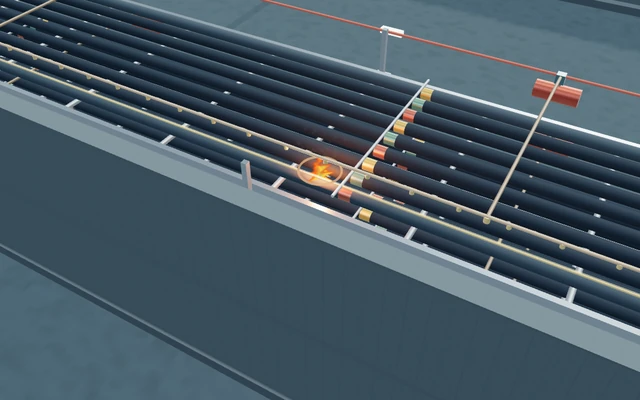 01 / DTS
Power plants · substations · data centers
Cable-gallery hot-spot detection & fire warning
For multilayer cable galleries and trays in power plants, substations, data centers and factories. Continuously track cable and joint temperatures, detect localized overheating and locate the affected section. Explore a four-level gallery, temperature profiles, control-room alarms and the response sequence with an integrated fire-control system.
High-precision configurations locate hot spots to ±0.05 m, with measurements in 3 seconds or less per kilometer to pinpoint cable overheating.
Enter the 3D scene↗
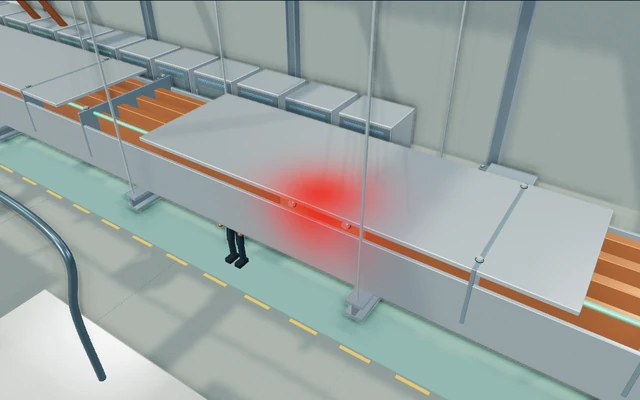 02 / DTS
Battery · photovoltaic · semiconductor · logistics
Industrial busbar & warehouse hot-spot monitoring
For lithium-battery, solar-cell and semiconductor factories, as well as logistics warehouses. Detect and precisely locate small hot spots at overhead busbars, rectifier-bus joints and storage racks. Two busbar channels and two rack channels demonstrate temperature-rise detection, device alarms, software location and field response.
Locate small hot spots to ±0.05 m, with measurements in 3 seconds or less per kilometer to detect overheating at busbar joints and storage areas.
Enter the 3D scene↗
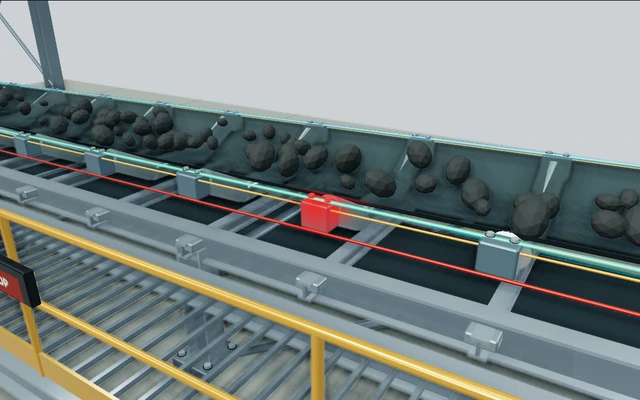 03 / DTS
Mining · ports · steel · cement
Conveyor bearing overheating & fire warning
For continuous conveyors in mines, ports, steelworks and cement plants. Sensing cable tracks temperature near idler bearings, drives and the belt to locate hot spots caused by friction or seizure. Follow hot-spot development, temperature profiles and control-room alarms to see how monitoring directs inspection and coordinated response.
High-precision configurations locate hot spots to ±0.05 m, helping teams find overheating rollers and bearings with less manual inspection.
Enter the 3D scene↗
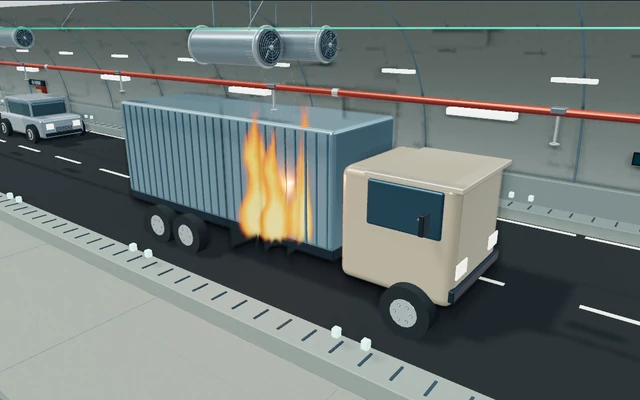 04 / DTS
Highway tunnels · urban tunnels · underpasses
Traffic-tunnel fire location & response
For highway tunnels, urban road tunnels and underpasses. Continuous temperature profiles reveal abnormal heating from vehicle or other tunnel fires and locate the alarm section. Follow the sequence from heat rise and device alarms to control-room location and integrated fire response, including the subsequent cooling trend.
Long-range configurations monitor up to 40 km per channel, tracking tunnel temperatures and fire locations with support for integrated fire response.
Enter the 3D scene↗
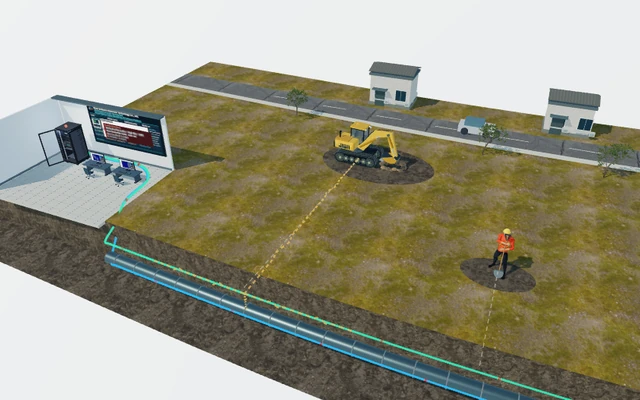 05 / DAS
Oil & gas pipelines · chemical corridors · water mains
Pipeline intrusion & leak-related acoustic monitoring
For oil and gas pipelines, chemical-pipeline corridors and water mains. Fiber sensing detects excavation, manual work, human activity and leak-related acoustic signatures, locating suspect sections for classification and inspection. Tour a 51.3 km route and follow each event through optical transmission, device alarms and control-center response.
Monitor up to 100 km per channel, with alarms configurable to as fast as 1 second to flag construction activity and potential leaks.
Enter the 3D scene↗
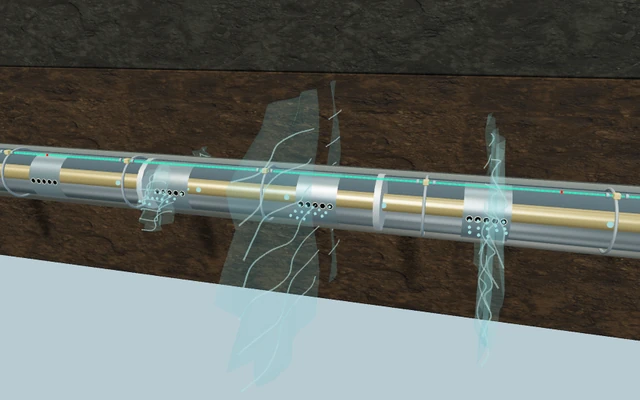 06 / DAS
Oil & gas · shale resources · geothermal wells
Horizontal-well fracturing & production diagnostics
For oil, gas, shale and geothermal wells. Distributed downhole acoustics supports analysis of fracturing response, production activity, suspected leaks and seismic-wave propagation. Explore an 8,135 m horizontal well using depth–time waterfalls, waveforms and spectra, interpreted alongside pressure, flow and operational records.
Sampling intervals as fine as 0.4 m reveal acoustic changes along the well, helping identify anomalies during fracturing and production.
Enter the 3D scene↗
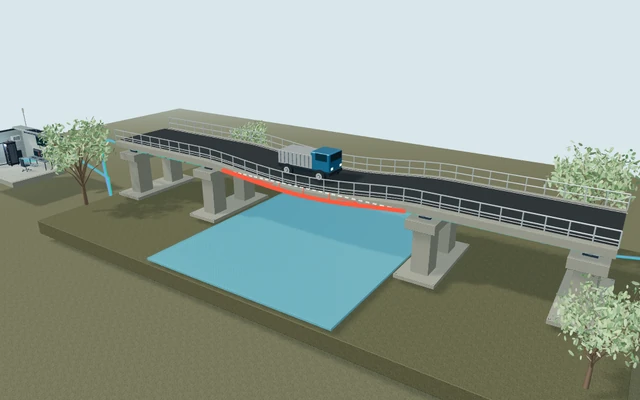 07 / BOT
Bridges · mines · tunnels · pipelines · slopes
Long-range strain monitoring for critical assets
Monitor load-induced fiber strain on bridges, mine roofs, tunnels, pipelines, slopes, overhead lines and subsea cables. Locate abnormal sections and assess trends. The seven-scene platform starts with a bridge, emphasizes pipeline deformation and slope movement, and illustrates roof and tunnel instability, tower loading and anchor drag.
Strain accuracy of ±20 με and long-range BOTDA coverage up to 120 km help track structural loading and deformation trends.
Enter the 3D scene↗
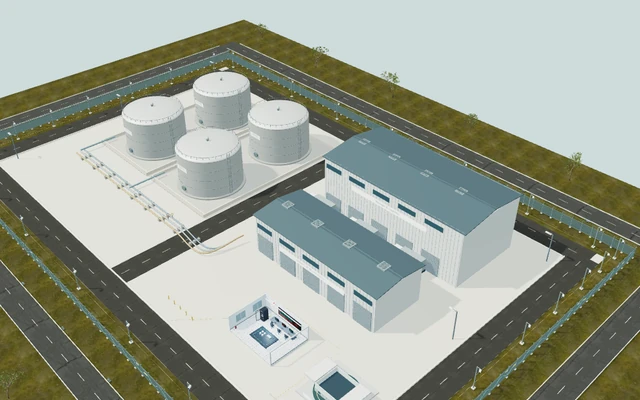 08 / ZFDS
Energy reserves · petrochemical sites · substations · factories
Perimeter intrusion warning & security response
For energy reserves, petrochemical sites, substations and factories. Passive sensing cable on fences, wall tops or buried routes detects climbing, cutting, impacts and digging, reporting the affected zone. Follow control-room alerts, video verification, drone approach and loudspeaker warning, then the security response.
One unit manages 16 zones and raises an alarm within 3 seconds once trigger conditions are met, identifying the affected zone.
Enter the 3D scene↗
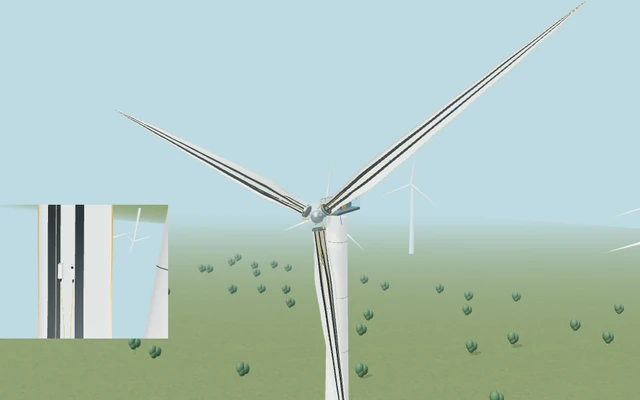 09 / SILICON
Onshore wind · offshore wind · large blades
Wind-blade acoustics, motion & clearance monitoring
For large onshore and offshore turbines. Triaxial optical accelerometers and acoustic heads at 7.5 m, 20 m and 35 m from each blade root track vibration, crack-related signatures and motion. Azimuth, speed and calibrated models support tip-clearance estimates. See deformation and risk locations, followed by pitch, load-reduction or shutdown responses.
Combined three-axis vibration and acoustic monitoring, with acoustic sensor bandwidth up to 20 kHz, helps identify blade anomalies and assess clearance risks.
Enter the 3D scene↗
ENGINEERED IN THE FIELD
Fiber sensing. Proven in the field.
Select a photograph to open its project album, or a title for project details.
10,000+Systems shipped across projects
5B+Equivalent fiber sensing points
2,000+Projects delivered
40 field projects · 156 site photographs
Power & cables · DTS
Hangzhou critical electrical-asset temperature monitoring
Power & cables · Fiber optic sensing
Kunming Cable Group smart-cable monitoring
Power & cables · Fiber optic sensing
Cable trench and cable tray monitoring
Power & cables · DTS
Donghuantuo Mining cable trench fire warning
Power & cables · DTS
Zheda Energy cable trench and tray temperature monitoring
Power & cables · Fiber optic sensing
Gaoqiao Petrochemical cable trench and tray monitoring
Power & cables · BOTDA
Zhejiang power-grid OPGW fiber strain monitoring
Power & cables · DTS
5 cm-class photovoltaic hotspot and fire monitoring
Industrial facilities · Fiber optic sensing
Lenovo Saudi Arabia factory busbar safety monitoring
Industrial facilities · DTS
Industrial power busbar temperature monitoring
Industrial facilities · DTS
Forklift factory DTS fire-warning project
Industrial facilities · DTS
Hyster forklift factory fire-warning project
Industrial facilities · Fiber optic sensing
Wanhua polyurethane plant fiber sensing project
Industrial facilities · DTS
Baosteel distributed fiber temperature monitoring
Industrial facilities · DTS
Medium-frequency furnace temperature monitoring
Industrial facilities · DTS
350°C boiler burner fiber temperature monitoring
Industrial facilities · Fiber optic sensing
Conveyor temperature monitoring in the field
Industrial facilities · Fiber optic sensing
Coal mine roadway pipe bundles and underground/surface conveyor monitoring
Energy storage & warehouses · DTS
Xuancheng lithium-battery warehouse monitoring
Energy storage & warehouses · DTS
Centimeter-scale sensing for aerospace energy storage
Oil, gas & pipelines · Fiber optic sensing
Gas pipeline leak and excavation monitoring
Oil, gas & pipelines · Fiber optic sensing
Pipeline third-party interference and excavation warning
Oil, gas & pipelines · DAS
Tailings pipeline acoustic and vibration monitoring
Oil, gas & pipelines · DTS
District-heating pipeline temperature monitoring
Oil, gas & pipelines · DTS
Heat-traced pipeline freeze protection monitoring
Oil, gas & pipelines · DTS
Shanghai heating-pipeline chamber monitoring
Oil, gas & pipelines · Fiber optic sensing
Strategic oil-storage tank fiber sensing project
Oil, gas & pipelines · DAS · DTS
Liaohe Oilfield Lei 61 gas-storage DAS and DTS monitoring
Oil, gas & pipelines · DTS
1,500 m DTS logging for a gas-storage well
Oil, gas & pipelines · DTS
SAGD heavy-oil recovery temperature monitoring
Oil, gas & pipelines · Fiber optic sensing
Sinopec Southwest permanent fiber fracturing monitoring
Oil, gas & pipelines · DAS · DTS
Sichuan Fuyang downhole acoustics and temperature monitoring
Oil, gas & pipelines · DTS · DAS
Xinjiang oilfield DTS and DAS well logging
Oil, gas & pipelines · Fiber optic sensing
Changqing Oilfield fiber sensing in Jingbian
Infrastructure & geohazards · DTS
Nanjing Yangtze River Bridge temperature monitoring
Infrastructure & geohazards · Fiber optic sensing
China Railway Major Bridge concrete pile testing
Infrastructure & geohazards · Fiber optic sensing
Pile integrity and cement-process temperature monitoring
Infrastructure & geohazards · BOTDA · DAS
Geohazard monitoring with BOTDA and DAS for emergency management
Infrastructure & geohazards · DAS